
How to Create Simple Stained Glass Patterns
There are three things you can watch forever: fire burning, water falling, and the way the sun dances through the colored mosaics. While our atelier is your go-to place for handmade stained glass art, why not try this ancient craft in your smart home? After all, when was the last time you made something, just for the fun of it?
To get some inspo, check out our quick guide on how to design stained glass patterns. All you need is a few basic instruments, a bit of planning, and a pinch of curiosity.
Easy Stained Glass Patterns: Begin Where You Are
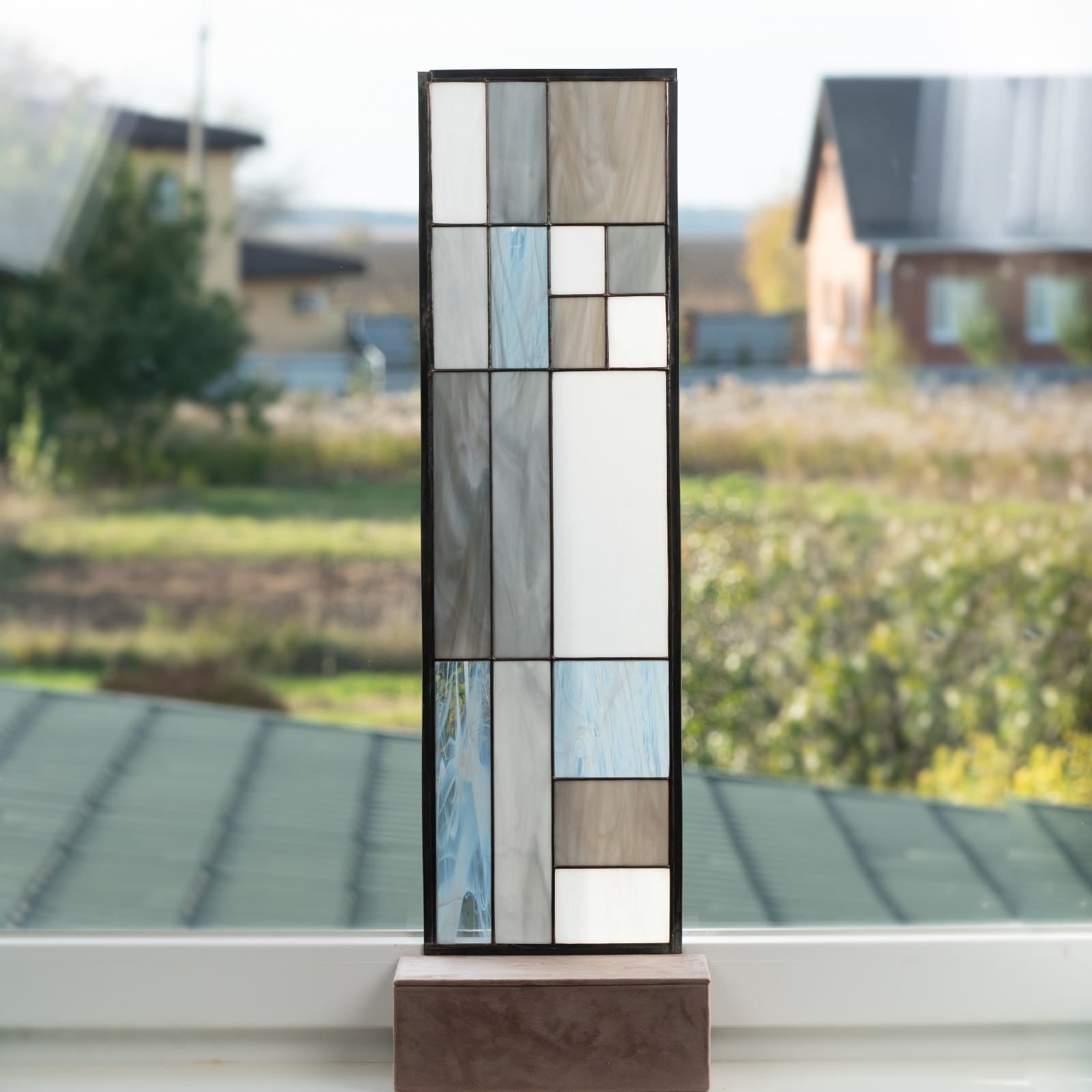
The best part is that both complex and simple stained glass patterns begin on paper. Whether you’re a fan of floral, abstract, or geometric motifs, first comes the sketch. If you’re a beginner in the glass art home decor craft, it’s better to pick simple geometric shapes, such as hexagons, triangles, and diamonds. Grab a sketchbook and draft a row of squares so they become tiny windows into color, or a gentle leaf curving like a whisper. They are sure to let light have some fun. And if you’re stuck, ready-made beginner collections online help.


When working on advanced-level or beginner easy stained glass flower patterns or geometrical objects, stay away from having a couple of lines meeting in one place. At the soldering stage, you’ll notice that where more lines meet, the solder tends to pile up and form a bigger blob. It’s not good.
Stay Accurate with DIY Stained Glass Patterns
Whether you’re engaged in the V-Day, Easter, or ho-ho-ho-themed Christmas stained glass patterns, accuracy is key. If not, you’ll most likely have to:
- re-cut the material;
- fill in huge gaps with solder;
- use narrower/wider zinc or lead around the outside to make it the right size;
- start over because things are unfixable.
How to Draw Stained Glass Patterns: Human vs. Digital Tools


If you’re into experimenting, we recommend trying all methods to bring your abstract, Celtic, or Art Deco stained glass patterns to life. Not ready to master new software? Glass Eye 2000 is the answer. It’s helpful with everything from light catchers to stained glass panels.
Or, perhaps, you’re more into working with real materials? You’re welcome to use:
- markers;
- pencils;
- paper sized to the width and length you prefer;
- framing ruler.
If you enjoy tactile creativity, drawing manually is the way to go.
On the other hand, with helpers like Adobe Illustrator and Procreate, you can:
- turn photos into simplified line art;
- try different color combinations;
- have 100% precise symmetry and proportions.
Just Draw It!
When you’re about to draw, think about the tools you’ll be using, like a cutter and grinder, or a ring saw. While the latter helps with difficult forms, the other two tools require making shapes possible to work with these instruments.
How to create stained glass patterns quickly? Turn a photo or picture into abstract or flower stained glass patterns:
- Pick a clear image with good contrast and strong shapes.
- Trace important lines and the biggest shapes only.
- Break it into glass pieces, thinking of the ways each section will become its own piece of glass. All fragments should be connected (floating pieces won’t work).
- Avoid tiny details because they’re hard to cut and easy to break. If a detail is tiny, see if it combines with a larger shape.
- Make complicated curves smooth. If a curve looks too sharp, soften it into a gentler line.
- Check if silhouettes are “cuttable.” Make sure each piece can actually be cut from glass. If it looks impossible, adjust the design.
Creating stuff is good for your brain. Working with mosaics, you feel a sense of mastery really hard to get sometimes in other places. If you’re not ready to cut or solder, our atelier window suncatchers, panels, and other crafts will help build an oasis of warm, life-affirming light. No tools required!


Leave a comment
This site is protected by hCaptcha and the hCaptcha Privacy Policy and Terms of Service apply.